About the Academies
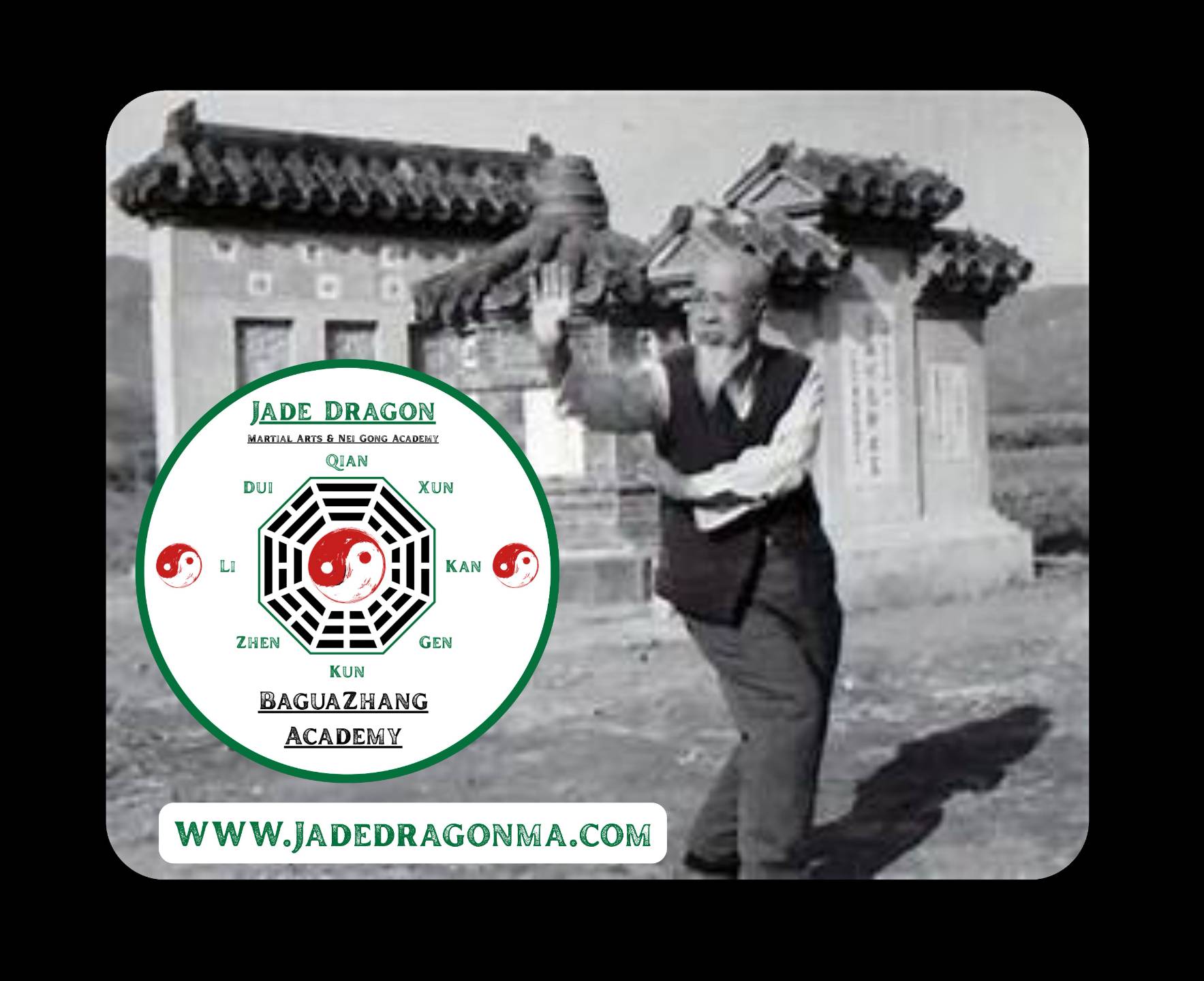
Welcome to the Jade Dragon Baguazhang Academy
Circle Walking Nei Gong
Baguazhang is an unusual art form in that, unlike other more conventional martial arts, it doesn’t include ‘forms’ in the normal sense. Instead, it is based upon the practice of various, short ‘palm changes’ which have the following qualitie:
- Circularity: All changes are performed while walking the circle, emphasizing continuous and uninterrupted motion.
- Spiraling Energy: Each palm change incorporates coiling and twisting movements, generating internal power and fluid transitions.
- Body-Mind Integration: The movements train coordination of the whole body, breath and focused intent (Yi).
- Martial Application: Each change includes striking, deflecting and evading techniques that emphasize Bagua’s unique adaptability and unpredictability.
Palm Changes
The Palm Changes form the heart of Baguazhang and act as the primary method through which the internal qualities cultivated through circle walking are brought into motion. Each palm change represents a concise transformation of structure, intent and energetic direction rather than a fixed technique.
Each palm change carries martial function while simultaneously refining sensitivity, spatial awareness and intent (Yi 意). Stepping, turning and hand methods are coordinated as a single action, allowing offence, defence and evasion to arise together. Over time, the changes cease to feel like separate movements and instead become expressions of an underlying internal method that can manifest freely.
Within the broader training, the palm changes serve as a bridge between internal cultivation and applied movement. They give form to the principles of Baguazhang while remaining fluid enough to change with the practitioners will.
Weaponry
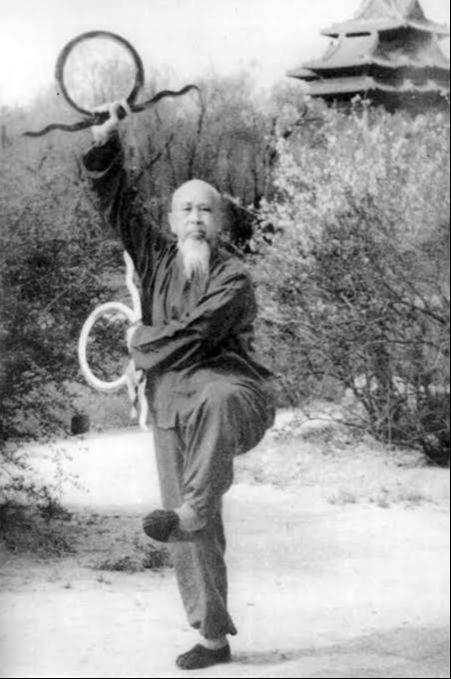
Within the esoteric framework of Baguazhang, the Deer Horn Knives are traditionally associated with the phases of the moon and its cyclical passage through waxing, fullness, waning and renewal. This lunar correspondence reflects the art’s underlying relationship with change as described by the Yi Jing (易經).
The Deer Horn Knives demand a high level of internal skill. Stepping, turning and hand method must remain unified as the practitioner moves through changing spatial relationships. Errors in alignment or intent immediately disrupt the flow of the weapon, making the knives an exacting teacher. Through sustained training, the practitioner learns to express internal power efficiently, guided by cyclical awareness rather than linear force.
The Baguazhang program of the Acadamy goes into great detail with regards to the Deerhorn knives in later stages of the training.
Partner Exercises
Partner training within Baguazhang centres upon Rou Shou, or ‘soft hands’, a method designed to cultivate sensitivity, adaptability and functional expression of internal principles. Rather than relying upon fixed drills or rehearsed responses, Rou Shou develops the practitioner’s ability to remain connected while responding fluidly to another body in motion. This work acts as a bridge between solo cultivation and applied skill.
Applications emerge naturally from this process rather than being imposed as isolated techniques. Stepping, turning and palm changes are introduced progressively, allowing martial function to arise from the same mechanics cultivated through circle walking and solo practice. Offence and defence unfold together, guided by angle, timing and positioning rather than force. This trains the practitioner to operate within close range while remaining calm and internally unified.
1. Ding Shi Ba Zhang (定式八掌)
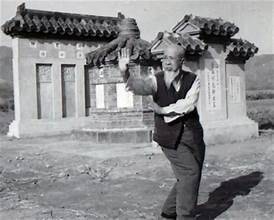
Training begins with Ding Shi Ba Zhang (定式八掌), the Eight Fixed or Static Palms. This is a core practice for learning to align and awaken the body’s internal mechanics. Each posture is held while walking the circle; this is Baguazhang’s equivalent to Taiji’s static, standing-post training.
This training is the basis of Baguazhang and a great deal of time should be spent here for those who wish to master Bagua training.
2. Ba Mu Zhang (八母掌)
Building upon the structural integrity of Ding Shi, the next stage introduces the Ba Mu Zhang(八母掌), or Eight Mother Palms. These dynamic changes form the nucleus of Baguazhang’s movement system, embodying the key forces and internal principles which underpin the art.
The eight mother palms taught within Lotus Nei Gong are a fairly fundamental version of the Cheng method. They serve as a basic method for training the palm changes without the student becoming bogged down with overly intricate choreography.
3. Cheng Shi Zhuan Zhang (程式转掌)
The classical form of Cheng Shi Zhuan Zhang (程式转掌), or Cheng Style Turning Palm, represents the most mature expression of the art as transmitted through the lineage of Cheng Tinghua. This form synthesizes the internal foundation of Ding Shi with the dynamic expression of the Mother Palms.
Try my methods for free
Not sure if this approach is right for you? Try it out risk-free for 7 days.